Flipper Zero NFC Risk: What Teams Should Know
The real Flipper Zero NFC risk for security teams — what it can and cannot clone, MIFARE Classic weaknesses, access-control detection, and credential hardening.

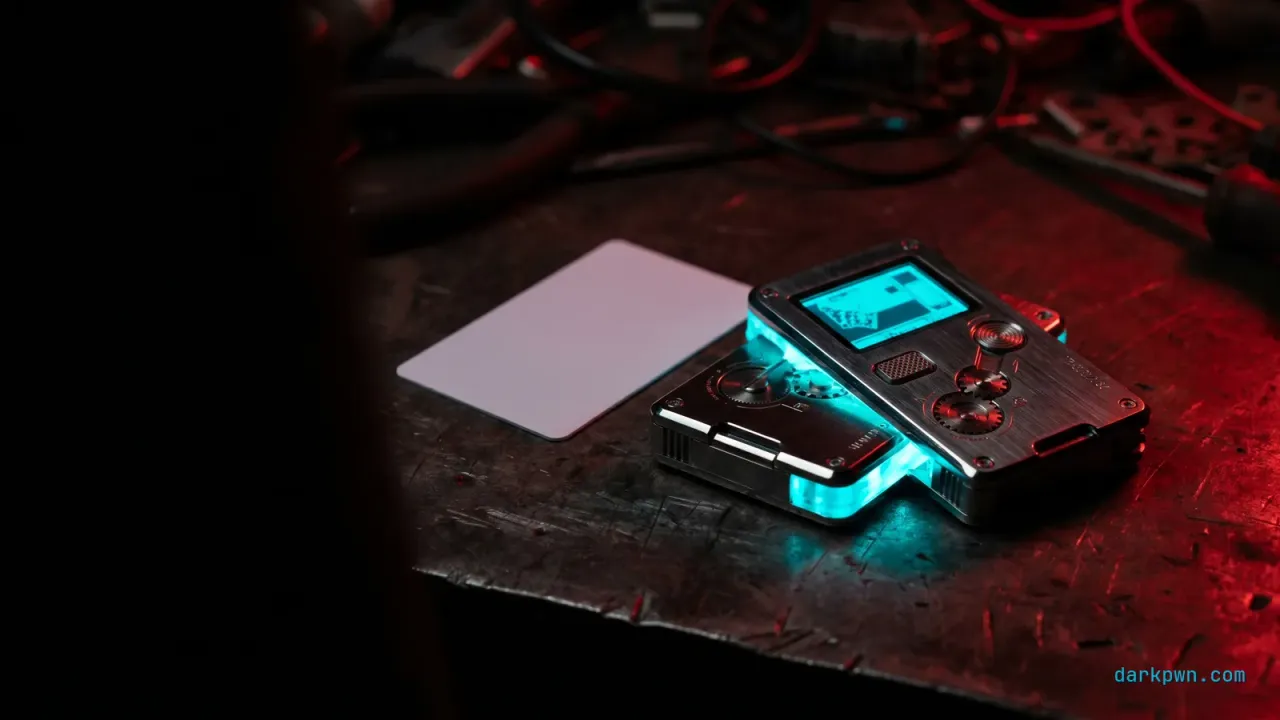
The Flipper Zero NFC risk is real but specific: it trivially clones legacy and default-key access cards, and it is decisively stopped by modern credentials. The mistake security teams make is reacting to the meme (“a toy that opens any door”) instead of the facts. A Flipper clones 125 kHz HID Prox and MIFARE Classic cards on default keys in seconds — but DESFire, iCLASS SE, and mobile credentials defeat it, and many readers detect the clone. This guide separates the hype from the threat model and ships the detection and hardening.
The device is a hardware addition to your physical-security perimeter, which maps to MITRE ATT&CK T1200 — Hardware Additions. The defensive question is not “can it clone a card” but “which of our cards, and what do we do about it.”
What is the actual Flipper Zero NFC risk?
The Flipper Zero is a pocket multi-tool with NFC (13.56 MHz) and RFID (125 kHz) radios, among others. Its NFC risk to an organization is credential cloning: reading a badge and writing it to a blank (“magic”) card or emulating it. Whether that works depends entirely on the credential technology — which is why the threat model, not the tool, is what matters.
It is the same lesson as HackRF defensive RF awareness: the device exposes weak controls you already had. A Flipper that clones your badge is telling you the badge was clonable.
What can a Flipper Zero actually clone?
| Credential | Clonable with a Flipper? | Why |
|---|---|---|
| 125 kHz (HID Prox, EM4100, Indala) | Yes, trivially | No encryption — just a readable ID |
| MIFARE Classic (default keys) | Yes, in under a minute | CRYPTO1 is broken; default keys via dictionary |
| MIFARE Classic (custom keys) | Partial / needs Proxmark3 | Encrypted sectors require key-cracking attacks |
| MIFARE DESFire EV1/EV3 | No (without keys) | Strong AES-based mutual authentication |
| iCLASS SE / Seos / mobile creds | No | Modern crypto + reader anti-cloning |
The pattern is clear: legacy and default-key cards fall instantly; modern cryptographic credentials hold. As the peer-reviewed research on the device concludes, its capabilities “coexist with effective barriers such as rolling-code and modern crypto.”
How to detect access-card cloning
A cloned card is identical to the original at the reader, so detection lives in the access-control logs — the same behavioral approach as broken access control detection, applied to physical doors.
index=physical sourcetype=access:badge
| sort 0 credential_id _time
| streamstats current=f last(reader_id) AS prev_reader last(_time) AS prev_time by credential_id
| eval gap=_time-prev_time
| where reader_id!=prev_reader AND gap < 30
| table _time, credential_id, prev_reader, reader_id, gap
The same credential badging at two physically distant readers within 30 seconds is a person who cannot exist — a clone, a tailgater, or a shared badge. Tune the gap to your facility’s real travel times. Also alert on badge use at impossible hours and a credential appearing at a reader it has never used.
If a Flipper is used in BadUSB mode against a workstation (it has a USB HID radio too), the endpoint signal is the same as a USB Rubber Ducky:
title: New HID Keyboard Device Attached Followed by Rapid Input
id: 7a2c9e15-darkpwn-illustrative
status: experimental
logsource:
  category: driver_load
  product: windows
detection:
  selection:
    DeviceClass: 'HIDClass'
    DeviceDescription|contains: ['Keyboard']
  timeframe: 10s
  condition: selection
falsepositives:
  - Legitimate new keyboards/KVMs (allowlist known device IDs)
level: mediumHow to audit your own access control
In an authorized physical-security review:
- Inventory credential technology at every reader — frequency and card type.
- Flag every 125 kHz and MIFARE Classic reader; these are the clonable population.
- Test default-key exposure on MIFARE Classic with authorized tooling (the card should not read on default keys).
- Verify reader anti-cloning — confirm modern readers reject emulated/cloned credentials.
How to harden access control against cloning
- Rolling codes / dynamic authentication beat any static, replayable credential.
- Multi-factor at sensitive doors (badge + PIN/biometric) so a cloned card alone fails.
- Tie badge logs to the SIEM for the impossible-travel detection above.
Common access-control mistakes
- Reacting to the device, not the credential. Banning Flippers does nothing; your card technology is the control.
- Leaving default keys on MIFARE Classic — the single most common cloning enabler.
- No access-log monitoring. Cloning is only visible downstream.
- Assuming “13.56 MHz = secure.” MIFARE Classic is 13.56 MHz and broken; the crypto matters, not the frequency.
Flipper Zero NFC risk checklist
- Inventory credential technology at every reader; flag 125 kHz and MIFARE Classic.
- Eliminate default MIFARE Classic keys immediately.
- Migrate legacy/default-key credentials to DESFire EV3, iCLASS SE, or mobile.
- Deploy readers with anti-cloning detection; add MFA at sensitive doors.
- Forward badge logs to the SIEM; alert on impossible-travel and off-hours use.
- Alert on first-seen-reader anomalies per credential.
- Treat a Flipper used as BadUSB like any HID-injection threat on endpoints.
- Run periodic authorized access-control audits.
Why is the badge the wrong place to put your trust?
The instinct on hearing that a card can be cloned is to look for a card that cannot be. That framing leads to an expensive upgrade cycle and leaves the underlying weakness in place, because the problem is not really the credential technology.
A badge is a bearer token in physical form. Whoever holds it is treated as the person it was issued to, and the reader has no way to distinguish an original from a faithful copy — that is what “faithful copy” means. Newer card technologies raise the cost of producing that copy, sometimes substantially, but the trust model is unchanged: one factor, presented once, at a door that then opens.
The consequences worth designing around:
- A cloned credential is indistinguishable at the reader, so detection cannot happen at the point of use. It has to happen in the pattern of use — the same badge appearing in two places, entries at implausible times, a badge used at a door its holder has never needed.
- Upgrading the card fixes one attack, not the class. The next weakness is a different cloning technique, a tailgate, or a borrowed badge, and none of those care what chip is in the card.
- The reader is not the security boundary. What sits behind the door is.
So the durable investments are not credential upgrades. They are defence in depth behind the door — a second factor for anything sensitive, network access that does not trust physical presence, and monitoring that treats badge events as telemetry rather than as proof. Then a cloned badge buys an attacker a corridor rather than a crown jewel, which is the outcome you can actually engineer.
What should you tell staff, and what should you not?
Awareness messaging around consumer RF tools tends to swing between dismissal and alarm, and both are unhelpful. Staff who are told the risk is nothing ignore the anomaly they witness; staff who are told a gadget can open any door become fatalistic about controls that do work.
The message that lands is specific and behavioural. Report a badge that stops working or behaves oddly, because a failed clone frequently precedes a successful one and the holder is the only person positioned to notice. Do not hold doors, since the most reliable bypass has never required any technology. Report loss immediately rather than at the end of the week, because the entire value of revocation is how quickly it happens. And question unfamiliar people in controlled areas, which is the control that catches what every technical measure misses.
What not to do is stage a demonstration of how easily a badge clones. It produces a memorable story and a durable belief that the controls are theatre, which is precisely the attitude that makes the human layer stop working. Show the detection instead — the report that catches a duplicated badge is a far more useful thing for people to have seen.
How do you audit your own access control honestly?
An audit that only checks whether the doors lock produces a clean report and no useful information. The questions that surface real exposure are about the credential lifecycle and the data behind the reader.
Can you enumerate every active credential? Not every issued one — every active one. Most estates have badges belonging to people who left, contractors whose engagement ended, and visitor cards never returned. Each is a working credential with no owner, and no technical control addresses it.
How long does revocation actually take? Measure it rather than quoting policy. The gap between a departure being recorded in HR and the badge ceasing to work is a real window, and in many organisations it is measured in days.
Do you have entry logs, and does anyone read them? Retained badge telemetry is what makes cloning detectable at all, since the reader cannot tell a copy from an original. If logs exist but nobody reviews them, you have the data and not the control.
Which doors matter? A cloned badge that opens a lobby is an inconvenience. One that opens a comms room or a records store is an incident. Knowing which doors are in the second category tells you where a second factor is worth the friction.
Are readers physically accessible from unsupervised space? Prolonged unobserved access to a reader or a badge is a prerequisite for most of these attacks, and it is frequently easy to remove.
The pattern across all five: the weaknesses that matter are procedural, not cryptographic. An estate with modern cards, stale credentials, slow revocation and unread logs is meaningfully less secure than one with older cards and a tight lifecycle — and only the second is something you control without a capital budget.
What does a realistic threat model look like here?
Proportionality matters, because access-control conversations swing easily into either complacency or expensive over-reaction. A useful model separates three attacker profiles, because they justify very different spending.
Opportunistic. Someone with a consumer device and curiosity, no specific target, acting on convenience. This profile is defeated by basic hygiene: badges not left on desks or visible on lanyards outside the building, doors that latch, staff who challenge strangers. No technology purchase is involved.
Targeted, low-resource. Someone who wants access to your building specifically and will spend a few hours on it. They will attempt a clone if a badge is briefly accessible, and they will tailgate if it is not. Defeated by the credential lifecycle discipline above plus a second factor on the doors that matter — and note the tailgate path means credential upgrades alone do nothing against this profile.
Targeted, resourced. Someone prepared to invest days, obtain insider assistance, or defeat multiple layers. Not stopped at the perimeter by anything proportionate. The defence is that physical presence buys them very little: no implicit network trust, no unattended unlocked workstations, sensitive material behind a second control.
The honest conclusion for most organisations: budget against the first two, and design so the third does not convert building access into system access. That last property is cheaper than a credential migration and protects against far more than badge cloning — which is why it is the recommendation even for teams that never see a Flipper Zero.
What detections are actually achievable?
Because the reader cannot distinguish a clone from the original, every detection here is behavioural — derived from the pattern of badge events rather than from any property of the credential. Four are practical with logs most access-control systems already produce.
Impossible movement. The same badge at two readers too far apart for the time elapsed. The strongest signal available, because it is unambiguous: one credential cannot be in two places, so a hit means duplication or a badge sharing arrangement — and both warrant a conversation.
Entry without a matching exit. Where readers exist on both sides, a badge that enters twice without leaving is either tailgating or a duplicate in use.
Out-of-pattern access. A badge used at a door its holder has never used, at an hour they have never worked. Individually weak, meaningful in combination, and it requires a baseline per holder rather than a global rule.
Reader errors preceding success. Failed reads clustered before a successful one can indicate an imperfect clone being tuned. This is the earliest possible signal and the one most often discarded as noise before it reaches anyone.
Two prerequisites decide whether any of this is available. Retain badge events long enough to establish a per-holder baseline — weeks, not days. And log denials and errors, not just grants, since three of the four detections above depend on the failures.
The realistic bar: none of these prevent a cloned badge from opening a door once. They convert an undetectable compromise into one that surfaces within a day or two, which is the difference between finding out from your logs and finding out from the consequences.
What does a proportionate response plan look like?
When a badge is suspected cloned, the instinct is either to do nothing (no proof) or to re-badge the building (expensive, disruptive). Both are wrong, and a short middle path handles nearly every case.
Revoke and reissue the single credential. Cheap, fast, and it closes the specific exposure. There is no reason to wait for certainty on one badge — the cost of being wrong is a replacement card.
Pull that badge’s history. Every reader event for the preceding weeks. This tells you whether the duplicate was already in use, and where — which is the difference between a precaution and an active incident.
Check what the badge could reach. If it opened only general-access areas, you are done. If it reached a comms room, a records store, or anywhere with unattended workstations, escalate to a real investigation including what was accessible once inside.
Look for the pattern, not the instance. One suspected clone is an event. Two in a quarter, or clones concentrated on badges with elevated access, is a targeting signal and warrants reviewing where badges are exposed — reception desks, gym lockers, parked cars, photographs posted publicly.
Only then consider systemic change. Credential technology, second factors on sensitive doors, or reader placement. Making that decision from a pattern is defensible; making it from a single incident usually buys the wrong thing.
The reason this ordering matters: the expensive responses are the ones most likely to be proposed in the first meeting, and the cheap ones are what actually resolve the situation.
Why does this get more attention than the risk warrants?
Worth addressing directly, because the disproportion shapes how these conversations go inside a company and how much budget gets misdirected.
Consumer RF tools are visible in a way most attacks are not. They are physical objects, they demo well on video, and the demonstration is legible to a non-technical audience in a way that a phishing kit or a misconfigured storage bucket is not. That visibility drives coverage, and coverage drives executive questions.
The actual risk ranking looks nothing like the attention ranking. For almost every organisation, credential phishing, unpatched external services, and misconfigured cloud permissions each represent far more realistic exposure than badge cloning — and none of them photograph well.
Two failure modes follow, and both cost real money:
Over-reaction. A credential migration is authorised because a video circulated, while a phishing-resistant MFA rollout that would prevent far more incidents remains unfunded.
Under-reaction by association. Because the coverage is overblown, the genuine underlying weakness — stale credentials, slow revocation, unread entry logs, no second factor on sensitive doors — gets dismissed alongside the hype.
The honest position is the middle one: the specific gadget matters little, and the access control weaknesses it illuminates matter a lot. Fix the lifecycle, log the entries, put a second factor where it counts. Those hold regardless of what hardware exists next year, which is the property you want from a control.
State that position explicitly when the question comes up internally. A clear, proportionate answer delivered early prevents both failure modes above, and it is far easier to give before a video is circulating than after.
Put it in writing so it survives being retold — a paragraph in the security FAQ is enough.
The takeaway
The Flipper Zero NFC risk is a credential-technology problem wearing a viral-gadget costume: legacy and default-key cards fall, modern cryptographic credentials hold. Migrate the credential, eliminate default keys, and watch the access-control logs for impossible-travel clones. Continue with Proxmark3 RFID security and HackRF defensive RF awareness, or browse the full Hardware Security pillar.
Training & tools referenced
Disclosure: Some links below are affiliate links. If you buy through them, darkpwn may earn a commission at no extra cost to you. We only recommend training and tools we actually use in our own lab, and affiliate links never influence editorial coverage.
- Flipper ZeroThe multi-tool referenced here — useful for authorized access-control auditsLab HardwareCheck price
- TryHackMeAuthorized labs to build RFID and NFC security skillsSecurity TrainingStart training
Frequently asked questions
Can a Flipper Zero clone any access card?
No. A Flipper Zero trivially clones legacy 125 kHz cards (HID Prox, EM4100) and MIFARE Classic cards still using default CRYPTO1 keys. It cannot clone cryptographically secure credentials like MIFARE DESFire EV1/EV3, iCLASS SE, or mobile credentials without the keys, and many modern readers detect cloned or emulated cards.
Why is MIFARE Classic insecure?
MIFARE Classic uses the CRYPTO1 cipher, broken years ago. Cards still on default keys can be read in under a minute via a dictionary attack, and the data written to a "magic" card. The defense is migrating to DESFire EV3 or AES-based credentials and eliminating default keys.
How do you detect access-card cloning?
Cloning is silent at the card, so detection lives in the access-control system: alert on the same credential used at two readers faster than a person could travel, badge use at impossible hours, or a UID appearing on a reader it has never used. Pair this with readers that perform anti-cloning checks.
Is the Flipper Zero a serious threat to my building?
It is a serious threat to legacy and default-key access control, which is most of the installed base — vendors estimate a large share of commercial keycards are clonable. It is largely stopped by DESFire/AES credentials, anti-cloning readers, and mobile credentials.
Keep reading
Proxmark3 RFID Security for Defenders
A defender's guide to Proxmark3 RFID security — auditing 125 kHz and MIFARE Classic credentials, detecting cloned badges, and migrating to DESFire EV3 and AES.
BadUSB Controls for Engineering Teams
BadUSB controls that survive contact with engineering teams — USB device control, HID allowlisting, USBGuard and WDAC, plus detection that does not block real work.
Evil Twin Access Points: Defensive Controls
Evil twin access point defenses for blue teams — detect rogue APs with a WIDS, why 802.1X server-cert validation and WPA3 matter, plus a captive-portal DNS signal.