Zero Trust Microservices: East-West Detection
Zero trust microservices detection. Find east-west movement via new service-pair edges, workload identity drift, and Kafka abuse, with SPL and KQL analytics.

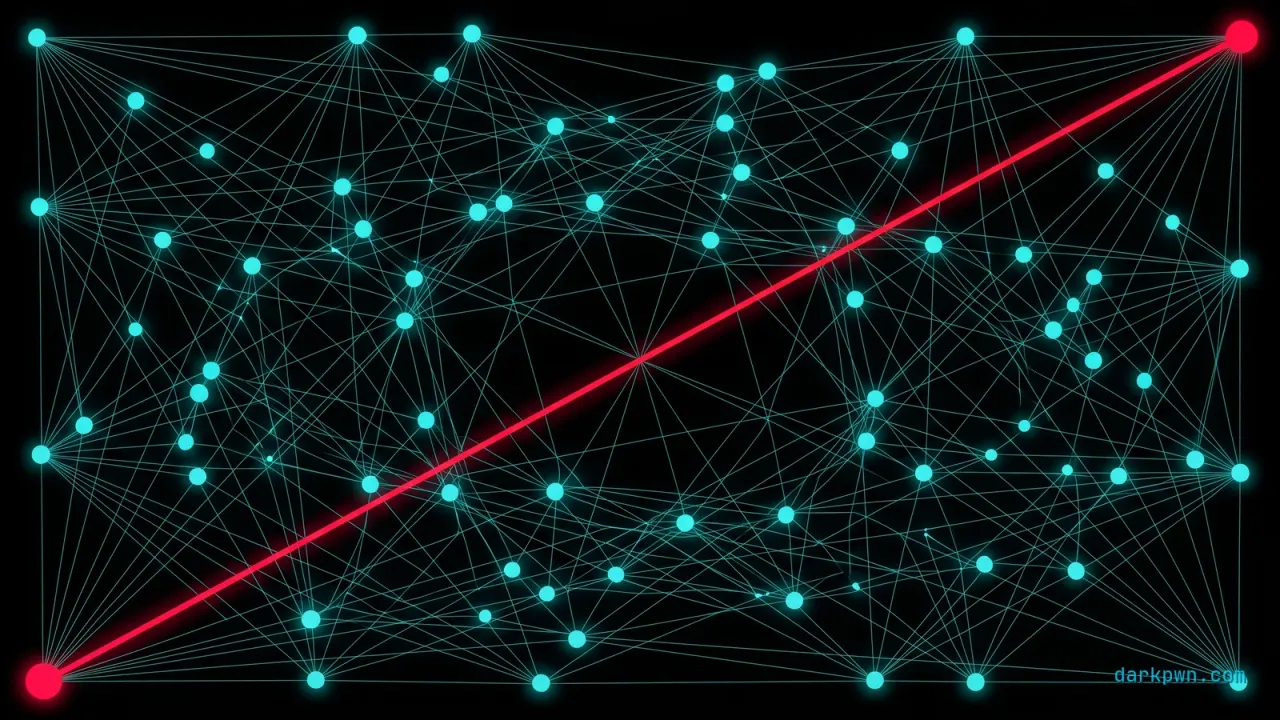
Zero trust microservices architecture is widely deployed and narrowly understood. Most estates that describe themselves as zero trust have enabled mutual TLS between services and stopped there, which authenticates every caller and authorizes none of them. The result is a flat network with excellent encryption: any compromised service holds a valid identity certificate and can reach every other service in the mesh. This guide covers detecting east-west movement in that environment, and closing the authorization gap that makes it possible.
East-west movement inside a mesh maps to MITRE ATT&CK T1021 — Remote Services, T1550.001 — Use Alternate Authentication Material: Application Access Token, and T1078.004 — Valid Accounts: Cloud Accounts. It is the cloud-native counterpart to the Windows techniques in detecting lateral movement, and it has one significant defensive advantage those techniques do not.
What is zero trust for microservices?
Zero trust for microservices means network position confers no trust. A service does not get to call another service because it happens to sit inside the same cluster, VPC, or namespace. It gets to make that call because it presents a cryptographic identity and because an explicit policy permits that identity to invoke that method on that service.
Three properties are required, and most deployments implement only the first:
| Property | What it establishes | Typical implementation | Commonly deployed |
|---|---|---|---|
| Workload identity | Who the caller cryptographically is | SPIFFE IDs, per-service certificates | Often |
| Mutual authentication | Both ends verify each other | mTLS via sidecar or mesh | Often |
| Explicit authorization | Whether this call is permitted | Default-deny per service-pair policy | Rarely |
| Continuous verification | Whether it is still permitted | Short-lived certs, policy re-evaluation | Rarely |
| Observability of decisions | What was allowed and denied | Mesh access logs with identities | Rarely |
The gap between rows two and three is where nearly all real risk lives. Deploying a mesh and turning on strict mTLS is a well-documented afternoon of work with a visible, satisfying result: all traffic encrypted, all callers authenticated. Writing authorization policy for every service pair is weeks of unglamorous work requiring knowledge of which services legitimately call which, and it is frequently deferred indefinitely.
Why is a microservice call graph easier to baseline than a user network?
This is the defensive advantage worth exploiting, and it is why east-west detection in a mesh can be dramatically higher fidelity than lateral movement detection on a corporate network.
A user network’s connection graph is driven by human behaviour, which is irregular, seasonal, and legitimately novel all the time. People open new applications, visit new file shares, and start new projects. Any “never seen this connection before” rule on a user network drowns in true positives that are not incidents.
A microservice call graph is driven by code. Service A calls service B because an engineer wrote a client call in a source file. The edge set changes when someone deploys, and it does not otherwise change at all. In a mature system with a hundred services, the set of legitimate directed edges is typically a few hundred pairs, it is enumerable, and it is stable for weeks.
That stability is what makes the primary detection viable:
A service pair that has never communicated in thirty days and suddenly communicates is either an undocumented deploy or an intrusion. There is no third common explanation.
In a system I operate — roughly ninety-five services across four languages behind a gRPC mesh — the observed edge set stays constant between deploys to a degree that makes new-edge alerting practical rather than aspirational. The operationally important detail, learned the hard way, is that the rule must be correlated with deployment events. Without that correlation every release produces a burst of alerts for genuinely new edges and the rule gets muted within two sprints.
What telemetry do you need?
| Requirement | Why it matters | Common failure |
|---|---|---|
| Caller workload identity on every call | The entire basis of east-west detection | Only the callee is logged |
| Callee identity, method, and namespace | Enables per-method policy and detection | Method not captured |
| Authorization decision (allow/deny) | Denials are the highest-fidelity signal | Mesh denials not exported |
| Pod and node attribution | Distinguishes identity theft from normal use | Identity logged without pod |
| Deployment events | Prevents release-day alert storms | Deploy telemetry not in the SIEM |
| Message bus client identity | Kafka and queues bypass the mesh entirely | Broker logs lack a real principal |
| Service account token usage | Detects stolen projected tokens | API server audit not collected |
| Thirty-day retention on call metadata | Baselines need history | Seven-day retention on mesh logs |
The sixth row is the most commonly missed and it is a genuine blind spot rather than a tuning problem. Teams instrument their mesh carefully and then move a large share of inter-service communication onto Kafka or a similar bus, which does not traverse the mesh at all. Every mesh authorization policy and every mesh detection is silently bypassed for that traffic. If your architecture uses an event bus, its authorization and telemetry need equal attention, and it usually gets none.
How to detect east-west movement
Three analytics covering the mesh, the identity layer, and the message bus.
Service-pair call never seen in the baseline topology
index=mesh sourcetype=envoy:access earliest=-1h
| eval caller = coalesce(source_principal, downstream_peer_id)
| eval callee = coalesce(destination_principal, upstream_cluster)
| eval edge = caller . " -> " . callee . " :: " . request_method
| search response_code!=0
| lookup mesh_edge_baseline edge OUTPUT first_seen, call_count_30d
| where isnull(first_seen)
| join type=left caller
    [ search index=cicd sourcetype=deploy:complete earliest=-6h
      | eval caller = "spiffe://" . cluster . "/ns/" . namespace . "/sa/" . service_account
      | fields caller, deploy_id, deploy_time, release_version ]
| eval recent_deploy = if(isnotnull(deploy_id), "YES", "NO")
| stats count AS calls, values(source_workload) AS caller_pods,
        values(destination_workload) AS callee_pods,
        values(request_method) AS methods,
        values(response_code) AS codes,
        max(recent_deploy) AS after_deploy
        by edge, caller, callee
| where after_deploy = "NO"
| sort - calls
The deployment join is the difference between a rule that runs for years and one that gets muted in a fortnight. A new edge within six hours of a deploy of the calling service is a release, and suppressing it removes essentially all of the benign volume. What remains is a new call path with no corresponding code change, which is precisely the anomaly worth waking someone for.
Rebuild mesh_edge_baseline on a rolling thirty-day window, and treat a growing baseline as
useful architectural documentation in its own right.
Workload identity used from an unexpected pod or namespace
A stolen service account token or projected certificate is used from the attacker’s location rather than from the workload it was issued to. The identity is valid; its origin is not.
let baseline_window = 30d;
let detect_window = 1h;
let identity_baseline =
    KubeAuditLogs
    | where TimeGenerated between (ago(baseline_window) .. ago(detect_window))
    | where isnotempty(ServiceAccount)
    | summarize KnownPods = make_set(SourcePod, 200),
                KnownNamespaces = make_set(SourceNamespace, 50),
                KnownNodes = make_set(SourceNode, 100),
                KnownVerbs = make_set(Verb, 50)
            by ServiceAccount;
KubeAuditLogs
| where TimeGenerated > ago(detect_window)
| where isnotempty(ServiceAccount)
| join kind=inner identity_baseline on ServiceAccount
| extend NewPod = SourcePod !in (KnownPods),
         NewNamespace = SourceNamespace !in (KnownNamespaces),
         NewVerb = Verb !in (KnownVerbs)
| where NewNamespace or (NewPod and NewVerb)
| extend RiskScore = toint(NewNamespace) * 4
                   + toint(NewPod) * 2
                   + toint(NewVerb) * 2
                   + iff(Verb in ("create","delete","patch","escalate","impersonate"), 3, 0)
| where RiskScore >= 5
| project TimeGenerated, ServiceAccount, SourceNamespace, SourcePod, SourceNode,
          Verb, Resource, NewNamespace, NewPod, NewVerb, RiskScore
| order by RiskScore desc
A namespace change weighs heaviest because it is the strongest indicator that the token left the
workload it belongs to. Pod change alone is normal, since pods are rescheduled constantly, which
is why it only scores when combined with a verb the identity has never used. The escalate and
impersonate verbs are worth a separate, immediate alert regardless of score, as they connect
directly to the container-escape paths in
Kubernetes security events to prioritize.
Message bus topic consumed by an unauthorized identity
The blind spot. Bus traffic bypasses the mesh, and topic authorization is frequently permissive because it was configured during development and never tightened.
index=kafka sourcetype=kafka:authorizer earliest=-24h
| eval principal = replace(principal_name, "^User:CN=([^,]+).*", "\1")
| lookup topic_acl_baseline topic principal
     OUTPUT authorized, expected_operation, consumer_group_expected
| eval finding = case(
      isnull(authorized),                              "UNDECLARED_TOPIC_ACCESS",
      operation != expected_operation,                 "OPERATION_MISMATCH",
      operation == "Read" AND consumer_group != consumer_group_expected,
                                                       "UNEXPECTED_CONSUMER_GROUP",
      operation == "Describe" AND topic == "*",        "TOPIC_ENUMERATION",
      1==1,                                            null())
| where isnotnull(finding)
| stats count AS events, values(topic) AS topics,
        values(operation) AS operations,
        values(client_host) AS hosts,
        values(consumer_group) AS groups,
        min(_time) AS first_seen
        by principal, finding
| eval topic_count = mvcount(topics)
| sort - topic_count, - events
TOPIC_ENUMERATION is the reconnaissance signal and deserves priority. A legitimate service knows
which topics it needs, because they are in its configuration. A service enumerating all topics is
either a misconfigured admin tool or something mapping your event architecture, and the
topic_count sort surfaces broad access patterns first.
Which false positives will you actually see?
| False positive | Which rule it hits | Why it happens | Resolution |
|---|---|---|---|
| New service deployment | New service-pair edge | Genuinely new legitimate call path | The deploy-event join handles it |
| Canary or blue-green rollout | New service-pair edge | New workload identity suffix | Normalise identity, strip version suffixes |
| Pod rescheduling | Workload identity | Pods move constantly by design | Score pod change only with a new verb |
| Sidecar or agent injection | New service-pair edge | Observability agents call broadly | Exclude known infrastructure identities |
| Service mesh upgrade | All mesh rules | Identity or log format changes | Re-baseline after any mesh upgrade |
| Batch job on a schedule | New service-pair edge | Weekly job outside a 30-day view | Extend baseline window past the longest cycle |
| Admin tooling | Topic enumeration | Legitimate operator tools list topics | Allowlist operator principals explicitly |
| Shared consumer groups | Consumer group mismatch | Multiple instances share a group | Baseline the group, not the instance |
The batch-job row is a subtle one worth designing around. A job that runs monthly will look like a new edge on a thirty-day baseline every single time it runs. Set the baseline window longer than your longest legitimate cycle, or explicitly register scheduled jobs as known edges.
How do you triage suspected east-west movement?
- Identify the compromised workload, not just the anomalous call. The new edge tells you the source identity; the actual question is what happened inside that pod.
- Pull the full call history for that identity. Everything it called in the last 24 hours, whether allowed or denied. Denials map the attacker’s exploration.
- Check whether the identity was used from more than one pod. This separates a compromised workload from a stolen credential, and the responses differ.
- Enumerate what the identity could reach. Its authorization policy and its RBAC bindings. Capability, not observed use.
- Check the API server audit log for the service account. Token theft frequently precedes direct API server access.
- Check the message bus separately. Mesh telemetry does not cover it, and it is a common second stage.
- Isolate rather than delete the pod. Cordon and snapshot before terminating, since a deleted pod takes its evidence with it. This is the cloud-native equivalent of pulling the network cable rather than powering off.
- Rotate the workload identity and any secrets it could read, following the secrets rotation path.
- Determine initial access. A vulnerable dependency, an exposed endpoint, or a supply chain compromise reaching the build.
Step 7 is where cloud-native response most often goes wrong. The instinct under pressure is to kill the pod, and killing the pod destroys memory, process state, and local filesystem evidence irretrievably while the orchestrator cheerfully schedules a replacement.
How to test your east-west detection
In a non-production cluster you own:
- Deploy two services with no legitimate call path between them and have one call the other. Confirm the new-edge rule fires and the deploy-join does not wrongly suppress it.
- Deploy a genuinely new service with a new call path. Confirm this is suppressed, verifying the suppression works in the intended direction.
- Copy a projected service account token into a pod in a different namespace and use it. Confirm the workload identity rule scores it high on the namespace change.
- Have a service consume a Kafka topic outside its ACL. Confirm the bus rule fires, and note whether any mesh rule fired, which demonstrates the bypass.
- Enumerate topics with a non-admin principal. Confirm
TOPIC_ENUMERATIONfires. - Confirm mesh access logs actually carry the caller principal. This is the single dependency that silently invalidates everything above, and it is frequently absent by default.
Item 6 should be step one in practice. Many mesh configurations omit the source principal from access logs by default, and every analytic here evaluates to nothing without it.
How to build actual zero trust between services
Four further controls carry disproportionate weight:
- Never mount broad service account tokens. Disable automounting by default and grant narrowly. Most workloads never need API server access at all.
- Segment the message bus by topic and principal. Read on one topic is not read on all topics.
- Run workloads as non-root with read-only root filesystems. This raises the cost of turning code execution into a durable foothold.
- Treat the mesh control plane as tier-zero. Whoever controls policy distribution controls every authorization decision in the estate.
Which zero trust control should you deploy first?
| Control | Stops | Effort | Blast-radius reduction | Deploy when |
|---|---|---|---|---|
| Mesh access logs with caller identity | Nothing directly | Low | None, but enables everything | Always, first |
| Call-graph baseline and new-edge alerting | Undetected movement | Low | None, detective | Always, second |
| Default-deny per service pair | Most lateral movement | High | Very high | After baselining |
| Short-lived workload certificates | Stolen identity reuse | Medium | High | Mesh supports it |
| Disable SA token automount | API server pivot | Low | High | Always |
| Message bus ACLs | The mesh bypass | Medium | High | You run an event bus |
| Network policy per namespace | Non-mesh traffic | Medium | Medium | Always, as depth |
The ordering is deliberate. You cannot write default-deny policy without knowing your real call graph, and attempting it without that knowledge produces an outage followed by a permissive rollback. Baseline first with detection, use the baseline to author policy, then enforce.
Common zero trust microservices mistakes
- Treating mTLS as the finished state. It authenticates; it does not authorize.
- Permissive default authorization. Every service reachable from every service.
- Omitting the caller principal from access logs. This makes east-west detection impossible.
- Ignoring the message bus. It bypasses every mesh control you deployed.
- Automounting service account tokens everywhere. Free API server credentials in every pod.
- New-edge alerting without deploy correlation. The rule gets muted after one release.
- Deleting the pod during response. Evidence gone, replacement scheduled.
- Baseline windows shorter than your job cycles. Monthly batch jobs alert monthly.
Zero trust microservices checklist
- Confirm mesh access logs include the caller principal, not only the callee.
- Capture the invoked method and the authorization decision on every call.
- Export mesh authorization denials as a high-priority alert stream.
- Build a rolling thirty-day service-pair call-graph baseline.
- Alert on service-pair edges absent from the baseline, correlated with deploy events.
- Extend the baseline window beyond your longest scheduled job cycle.
- Collect API server audit logs and baseline service account usage by pod and namespace.
- Alert on workload identity used from an unexpected namespace.
- Alert immediately on the
escalateandimpersonateverbs regardless of score. - Apply and monitor message bus ACLs per topic and principal.
- Alert on topic enumeration by non-operator principals.
- Author default-deny authorization policy per service pair using the baseline.
- Move to short-lived automatically rotated workload certificates.
- Disable service account token automounting by default.
- Run workloads non-root with read-only root filesystems.
- Rehearse the isolate-before-delete response so evidence survives.
The takeaway
Zero trust microservices means authorization, not just encryption. mTLS with permissive policy is a well-encrypted flat network in which any compromised workload can reach everything. Exploit the one advantage cloud-native gives you: a call graph defined by code is stable enough that a new service-pair edge is genuinely anomalous, so baseline it, correlate with deploys, and alert. Extend the same thinking to workload identity origin and to the message bus that bypasses your mesh entirely. Then use that baseline to author the default-deny policy that makes the movement impossible rather than merely visible. Continue with Kubernetes security events to prioritize, CloudTrail monitoring patterns that matter, and detecting lateral movement, or browse the full Defensive Research pillar.
Training & tools referenced
Disclosure: Some links below are affiliate links. If you buy through them, darkpwn may earn a commission at no extra cost to you. We only recommend training and tools we actually use in our own lab, and affiliate links never influence editorial coverage.
- PluralsightKubernetes, service mesh, and cloud-native security training pathsSecurity TrainingBrowse courses
- TryHackMeAuthorized labs to practice container and cloud attack analysisSecurity TrainingStart training
Frequently asked questions
What is zero trust for microservices?
Zero trust for microservices means no service is trusted because of where it sits on the network. Every call carries a cryptographic workload identity, every call is authorized against an explicit policy, and network position grants nothing. In practice that means mutual TLS between services, per-service identity certificates, and default-deny authorization policy on every service-to-service path.
How do you detect lateral movement in a service mesh?
Baseline the call graph, then alert on service pairs that have never communicated before. A microservice topology is far more stable than a user network, so a genuinely new service-pair edge is a strong signal. Layer workload identity used from an unexpected pod or namespace, and message-bus topics consumed by identities that never consumed them.
Does mTLS alone give you zero trust?
No. mTLS authenticates that a caller is who it claims to be; it says nothing about whether that caller should be allowed to make this specific call. Without authorization policy on top, a compromised service holds a valid certificate and can reach every other service in the mesh. Authentication without authorization is a well-encrypted flat network.
Why is a microservice call graph easier to baseline than a user network?
Because it is defined by code rather than by human behaviour. Service A calls service B because a developer wrote that call, so the edge set changes only at deploy time and is otherwise near-static. That stability makes a never-before-seen edge far more meaningful than a never-before-seen connection on a user network.
What telemetry do you need for east-west detection?
At minimum, per-call records carrying both the caller and callee workload identity, the namespace and pod of each, the method invoked, and the authorization decision. Sidecar or eBPF-based mesh telemetry provides this. Without the caller identity on every call, east-west detection is not possible at any level of effort.
Keep reading

Kubernetes Security Events to Prioritize
The Kubernetes security events worth alerting on — exec into pods, privileged containers, host mounts, and RBAC changes — with Falco rules and audit-log detection.

CloudTrail Monitoring Patterns That Matter
The AWS CloudTrail monitoring patterns that actually catch attackers — root usage, IAM changes, logging tampering, and credential exfiltration, with detection logic.

Supply Chain Attack Detection
Supply chain attack detection in CI/CD. Build-time egress, dependency drift, and artifact provenance, with Sigma and SPL analytics plus hermetic-build hardening.